The Butterfly
Slip jig in E Minor · by Tommy Potts · difficulty 2 of 5
The story of The Butterfly
The Butterfly may be the most famous slip jig of them all, and it is a fine example of how differently one tune can sound in different hands. The original recording by the Dublin fiddler Tommy Potts, on The Liffey Banks (1972), is a proper dance tune - brisk and lively. Search for a modern version, though, and nearly every rendition is a slow, lamenting performance.
The Butterfly is another Irish tune that had its big-screen moment: The Secret of Roan Inish (1994) employs perhaps the most lyrical version of the tune - and one of the most memorable. Fast or slow, it sits easily on the tin whistle: the range stays modest and each part leans on a repeating figure, which makes it a natural first slip jig for beginners.
How to play The Butterfly on tin whistle
Slip jigs dance in 9/8: three gentle groups of three to the bar. Lightness matters more than speed; let the phrase glide.
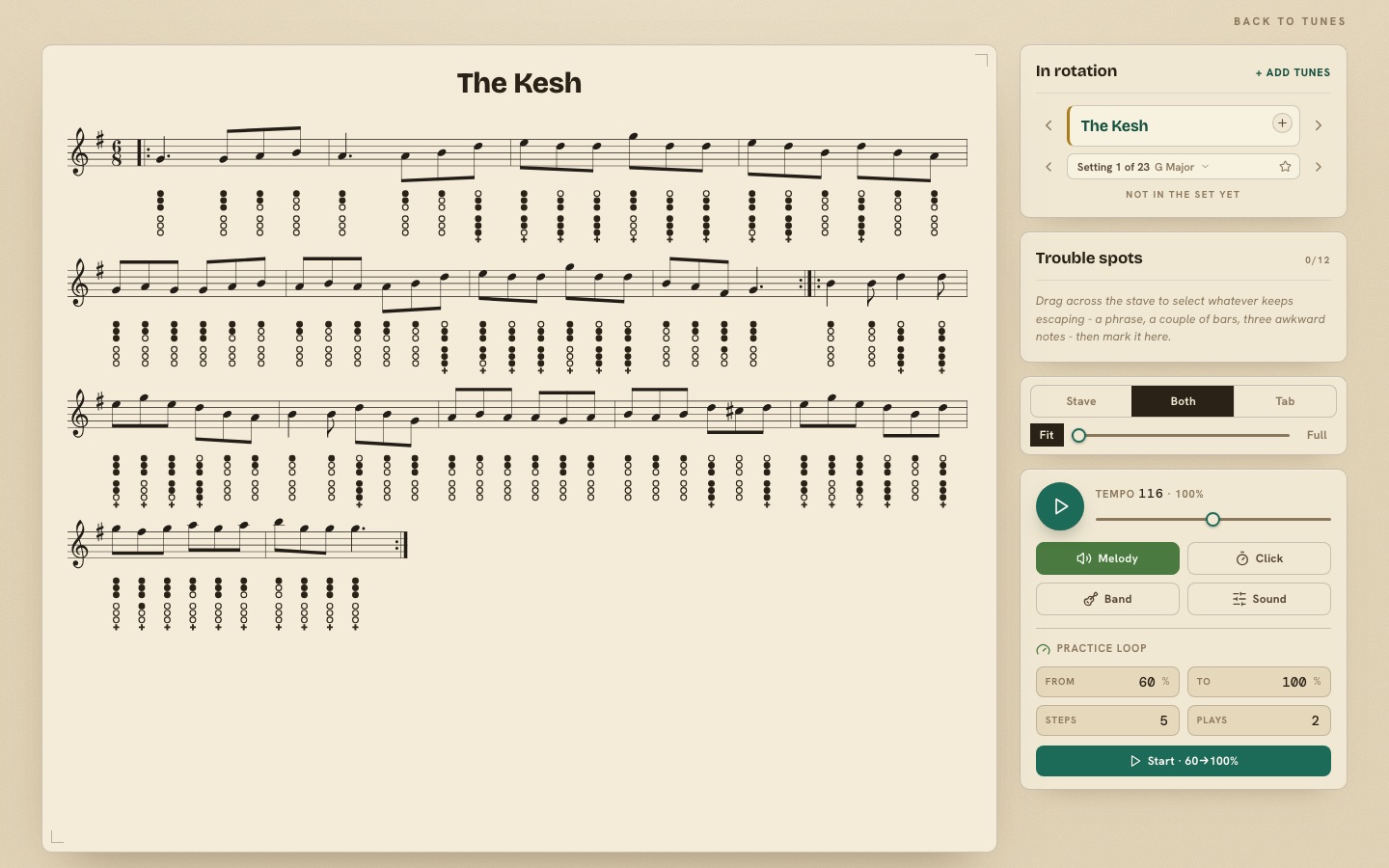
The tab under the notes shows the whistle fingering for every note - filled circles are covered holes, and a + means the overblown octave. If you are new to stave notation, you can try reading the stave and tab together which gradually will make you learn the notation.
Start slow with a metronome getting the base melody right. As the fingers learn the tune, try adding some ornaments and gradually increase the tempo without losing control.
Notation is sourced from The Session, the community archive of traditional music.
Learn this tune faster with the help of Windway
Windway is built for fun and effective tin whistle practice. Give it a try for free!